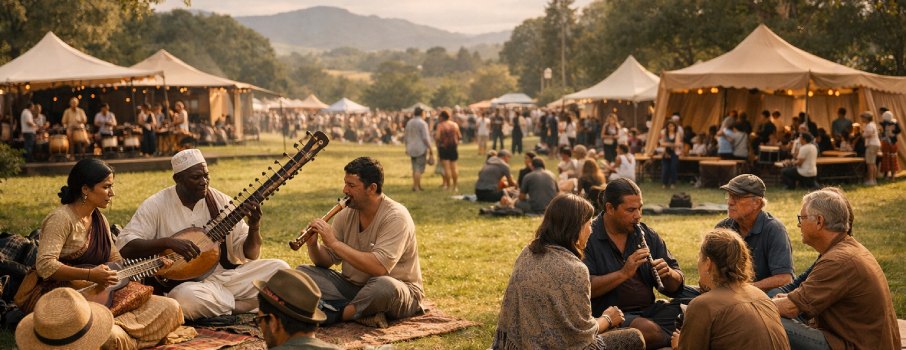
WOMAD New Zealand was just never about a mere concert. From the first editions, the festival has been a cultural convocation that appreciates curiosity, respectful curiosity. The respect and learning experiences are as much part of the event as entertainment itself, while all performances remain only a part of it. This is a place where people learn what and where the fresh sounds and ideas come from.
By taking the festival to New Zealand, WOMAD is basically saying something more. Being situated geographically so distant from many cultural centers, New Zealanders find it hard to avail of traditional cultures unmediated by the filter of mass media. WOMAD steps in as an answer to bring what is mostly inaccessible culture in any form-helping many uninformed new initiates into world culture.
From International Concept to Local Festival
WOMAD began as an international idea centered on celebrating music and dance from around the world. When adapted to the New Zealand context, that concept was reshaped to reflect local realities. Organizers had to consider the scale of the audience, the expectations of festivalgoers, and the cultural landscape of the host region. Over time, this process transformed WOMAD New Zealand into something distinct from its counterparts elsewhere.
Rather than simply importing an overseas format, the festival developed its own rhythms. The programming balances international acts with regional considerations, ensuring that global music feels grounded rather than imposed. This adaptation has helped the festival build long-term trust with local audiences who return not just for big names, but for the overall experience.
A Focus on Cultural Exchange, Not Spectacle
Unlike festivals driven primarily by headline acts or commercial trends, WOMAD New Zealand emphasizes cultural exchange. Performances are framed as opportunities to learn about different musical traditions, histories, and social contexts. Audiences are encouraged to listen actively, even when the music challenges familiar structures or languages.
This approach reduces the risk of turning culture into spectacle. Artists are presented as practitioners with deep roots in their traditions, not as exotic novelties. The result is an atmosphere that values respect and curiosity, allowing cultural exchange to happen on more equal terms between performers and audiences.
Accessibility and Openness as Core Values
Another defining purpose of WOMAD New Zealand is accessibility. The festival attracts a wide range of attendees, including families, long-time music enthusiasts, and people who may not regularly attend live performances. This diversity shapes how the festival is organized, from programming choices to the layout of spaces.
Openness is reflected in the way audiences move between stages, workshops, and informal encounters. Cultural exchange does not happen only during scheduled performances but also through conversations, shared meals, and spontaneous moments. These interactions help demystify global cultures and make them feel part of everyday life rather than distant traditions.
Global Music Traditions on a New Zealand Stage
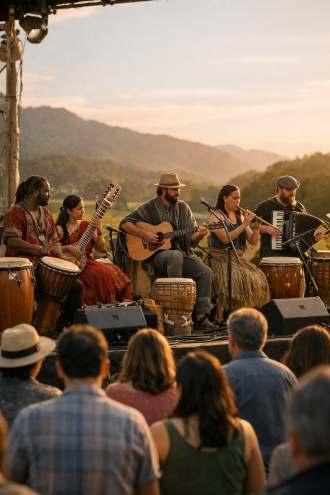
At the very heart of WOMAD's New Zealand vision is this essential element of bringing the music of the wide world to New Zealand audiences. These performances showcase to the listeners sounds, rhythms, and instruments not commonly experienced, adding new vocabulary to the local music scene. And then, this exposure of sounds takes place in a live and coming-together setting by the local scene. The outdoor festival, then, works beyond what is achieved by the recordings.
It is in this. The stage of New Zealand is a place where the music from global traditions gets caught in the air, and then it is recognized by the audience in different ways. The physical and in-the-flesh presence of the performers; the experience of shared and collective listening; and the context and space provided by the festival add to the richness of portraying a musical performance from the farthest reaches of the world.
Representation Across Regions and Traditions
WOMAD New Zealand typically features artists from a wide range of regions, including Africa, Asia, Europe, the Americas, and the Pacific. This breadth ensures that no single tradition dominates the narrative of global music. Instead, audiences are invited to appreciate the diversity and complexity of musical expression worldwide.
Representation also extends to different musical forms, from ancient folk traditions to contemporary hybrids. By placing these side by side, the festival challenges simplistic ideas about what “traditional” or “modern” music looks like, showing how cultures evolve while retaining continuity with their past.
Live Performance as Cultural Context
Hearing global music live offers insights that recordings cannot fully capture. Performance styles, audience interaction, and the physicality of sound all provide clues about how music functions within its original cultural setting. WOMAD New Zealand prioritizes live performance as a way of preserving this context.
Artists often introduce their work with explanations or stories, helping audiences understand the meaning behind the music. These moments turn concerts into learning experiences, where sound is linked to history, language, and social life rather than existing in isolation.
Challenging Familiar Listening Habits
For many attendees, WOMAD New Zealand presents music that does not follow familiar Western structures. Unusual time signatures, tonal systems, or performance practices can initially feel challenging. Rather than smoothing these differences, the festival embraces them as part of the experience.
This challenge encourages active listening. Audiences learn to appreciate music on its own terms, without forcing it into familiar categories. Over time, this openness can influence how people engage with music more broadly, fostering greater tolerance for difference and experimentation.
Connection to Place and Environment
The physical setting of WOMAD New Zealand plays a significant role in shaping the experience. Outdoor stages, open spaces, and the surrounding environment create a relaxed atmosphere that encourages exploration. The landscape becomes part of the festival's identity, influencing how music is heard and shared.
This connection to place reinforces the idea that culture is not abstract. Global traditions are experienced within a specific environment, reminding audiences that all music is shaped by geography, climate, and social context. In this way, the New Zealand setting becomes an active participant in the festival.
Involvement of Local Artists and Practitioners
Local artists and cultural practitioners often contribute to WOMAD New Zealand, whether through performances, workshops, or collaborative projects. Their presence grounds the festival in the local creative community and highlights connections between global and regional traditions.
These contributions also challenge the notion that cultural exchange flows in only one direction. Local musicians share stages with international acts, creating opportunities for dialogue and mutual influence. This exchange strengthens the local scene by exposing artists to new ideas and practices.
Community Learning Beyond the Main Stages
WOMAD New Zealand extends beyond music through workshops, talks, and interactive sessions. These activities invite deeper engagement with cultural practices, from dance and storytelling to food and craft. Learning becomes a shared experience rather than a formal lecture.
For local communities, these sessions offer rare opportunities to interact directly with international practitioners. The emphasis on participation helps demystify cultural difference and encourages ongoing curiosity long after the festival ends.
Recognizing Māori Cultural Foundations
Māori culture provides an essential framework for understanding place, community, and history in New Zealand. WOMAD New Zealand often incorporates Māori perspectives through performances, ceremonies, or collaborations that acknowledge this foundation.
These elements are not presented as background features. They are treated with respect and visibility, reinforcing the idea that cultural exchange must begin with recognition of the land's original custodians and their ongoing presence.
Pacific Connections and Shared Histories
Pacific cultures hold a strong presence in New Zealand society, reflecting historical migration and ongoing relationships across the region. WOMAD New Zealand often includes Pacific artists whose work resonates with local audiences through shared experiences of movement, identity, and adaptation.
These performances highlight connections rather than differences. They show how Pacific traditions continue to evolve in dialogue with global influences while remaining rooted in community and ancestry.
Balancing Global Inclusion with Local Respect
Including Indigenous and Pacific perspectives requires careful balance. WOMAD New Zealand must ensure that global inclusion does not overshadow local voices. This balance is maintained through consultation, collaboration, and thoughtful programming.
By foregrounding respect and partnership, the festival models an approach to cultural exchange that avoids appropriation. It demonstrates how global celebration can coexist with local responsibility.
Economic, Social, and Cultural Impact
Beyond its artistic value, WOMAD New Zealand has tangible economic and social effects. The festival attracts visitors, supports local businesses, and creates seasonal employment. These impacts help justify public and community support for the event.
However, its cultural impact is often more enduring. The festival influences how people think about music, culture, and their place in a globalized world.
Supporting the Local Economy
During the festival period, local accommodation, food services, and transport providers benefit from increased demand. This economic activity extends the festival's influence beyond its immediate site, reinforcing its value to the wider community.
Importantly, this economic impact is tied to cultural engagement rather than mass commercialization. The festival's scale remains manageable, helping maintain a balance between economic benefit and community well-being.
Shaping Cultural Awareness and Openness
Repeated exposure to global music and traditions can shift cultural attitudes over time. WOMAD New Zealand encourages openness by normalizing difference and presenting it as something to be enjoyed rather than feared.
For many attendees, the festival becomes an entry point into further exploration of global cultures. This ripple effect extends the festival's influence into everyday life, education, and local arts scenes.
Listening Across Borders, Rooted at Home
The WOMAD show in Aotearoa New Zealand is a great example of giving a very deep appreciation in a local environment of global culture. Through well-cultivated music and community participation, WOMAD puts much stress on differences filled in by bridging distances. I would think the festival reminds us of something – that cultural sharing has its roots in listening, grows through respect, curiosity, and the shared experience.